 An official website of the United States government


 ) or https:// means you've safely connected to the .mil website. Share sensitive information only on official, secure websites.

Rare Cancers
Vision – To improve outcomes for people with rare cancers through discovery and community building, and expansion of knowledge across cancer landscape
Mission – Promote rare cancers research by catalyzing knowledge building and enabling clinically impactful discoveries for the benefit of patients, Service Members, their Families, Veterans and/or the American public

» Click on Image to View Summary Sheet

» Click on Image to View Strategic Plan
A recent report from the American Cancer Society (ACS) found that one in five cancers diagnosed in the United States (U.S.) is a rare cancer, which is defined as an incidence of fewer than six cases per 100,000 people per year. By this definition, around 200 forms of rare cancer compose around 20%-25% of all U.S. cancer diagnoses, which affect more than 400,000 Americans per year.
There are a significant number of incidences of rare cancers in the U.S. military population. Over 60 forms of cancer disproportionately impact those who have served in the military, and 67% of them are rare cancers. 2017 data suggests that there are approximately 8,000 new cases of rare cancers in the U.S. Department of Veterans Affairs (VA) per year which account for 16% of all VA cancers.
Rare cancers are traditionally understudied, reducing the progress of research and hindering decisions for patients, physicians, and policy makers. For many rare cancers, research to identify causes or develop strategies for prevention and early detection is extremely difficult. In addition, rare cancers can be extremely challenging in terms of diagnosis, getting information about the cancer and caregiver assistance, fewer number of clinical trials, and lack of treatment options.
The U.S. Congress established the Rare Cancers Research Program (RCRP) in the Fiscal Year 2020 Department of Defense appropriation with an appropriation of $7.5 million to address extreme challenges of people with rare cancers. RCRP will support research on the prevention, detection, diagnosis, and treatment of Service Members, Veterans, their families, and the American public.
RCRP will be managed by utilizing the CDMRP two-tiered review process. A stakeholders meeting was held on 17 April 2020, which brought experts from different subject areas together to identify knowledge gaps, outcome, and product needs for the state of the science and patient care.
At the stakeholders meeting, it was decided that CDMRP will follow the definition of rare cancer as an incidence of six or fewer cases per 100,000 people per year. The RCRP focuses on the following areas:
- Biology: Identify disease-defining molecular pathways, cell context and microenvironment
- Preclinical Research Model: Develop and validate rare tumor-specific models that can support clinical trial readiness
- Therapy: Identify novel therapeutic strategies, including drug repurposing
- Artificial Intelligence (AI) and Machine Learning (ML) Model: Establish use of AI and/or ML tools in discovery, preclinical studies, and clinical trial readiness
- Platform Development: Develop platforms, such as tumor tissue repositories with clinical annotation, centralized databanks, patient registries with common data structure, research models, "omics" databases, and longitudinal studies of natural history and treatment response, for types or subtypes of rare cancers to allow sharing of data, biospecimens and resources
American Cancer Society: https://www.cancer.org/cancer/all-cancer-types.html
FY20 RARE CANCERS RESEARCH PROGRAM STAKEHOLDERS MEETING SUMMARY
FY20 RARE CANCERS RESEARCH PROGRAM STAKEHOLDERS SURVEY SUMMARY

Congressional Appropriations
- $95 million
FY20-25 - $17.5 million
FY26

Funding
Summary
- 162 Awards in FY21-24
- Recent Applications Recommended for Funding

Programmatic
Panels

Peer Review
Participants
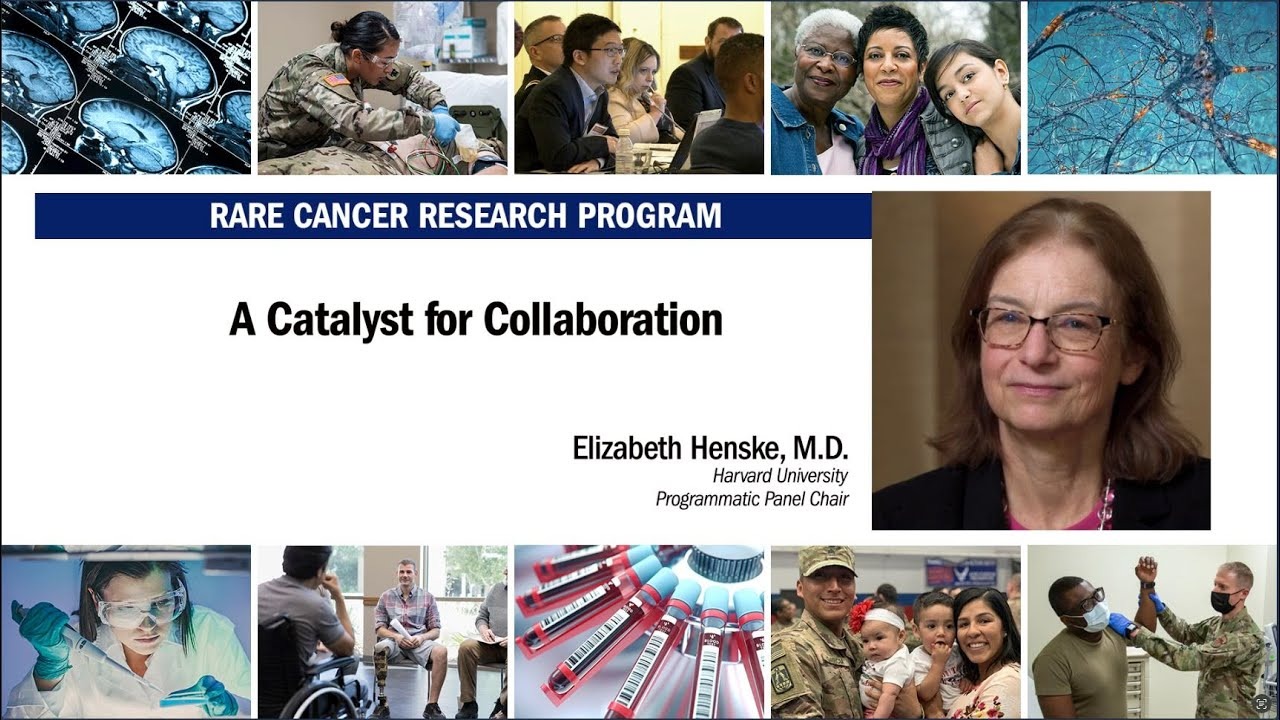
Elizabeth Henske, M.D.
Harvard University
A Catalyst for Collaboration
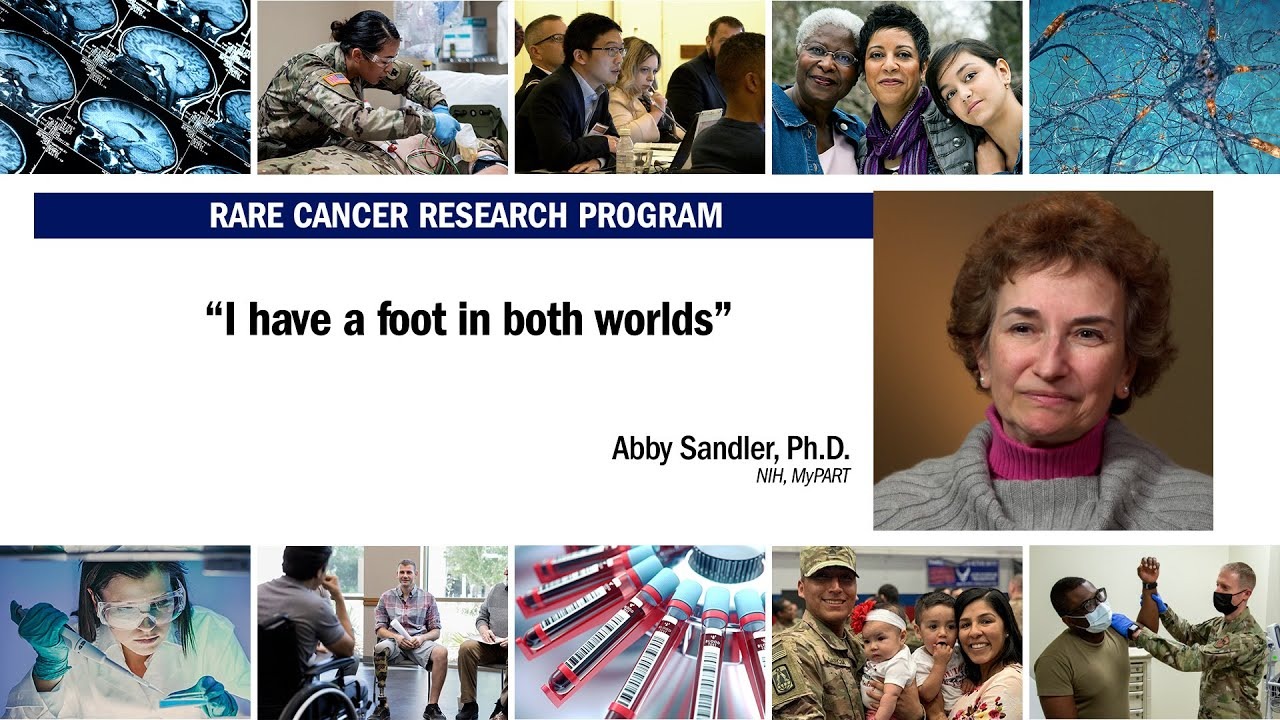
Abby Sandler, Ph.D.
National Institute of Health
A Foot in Both Worlds
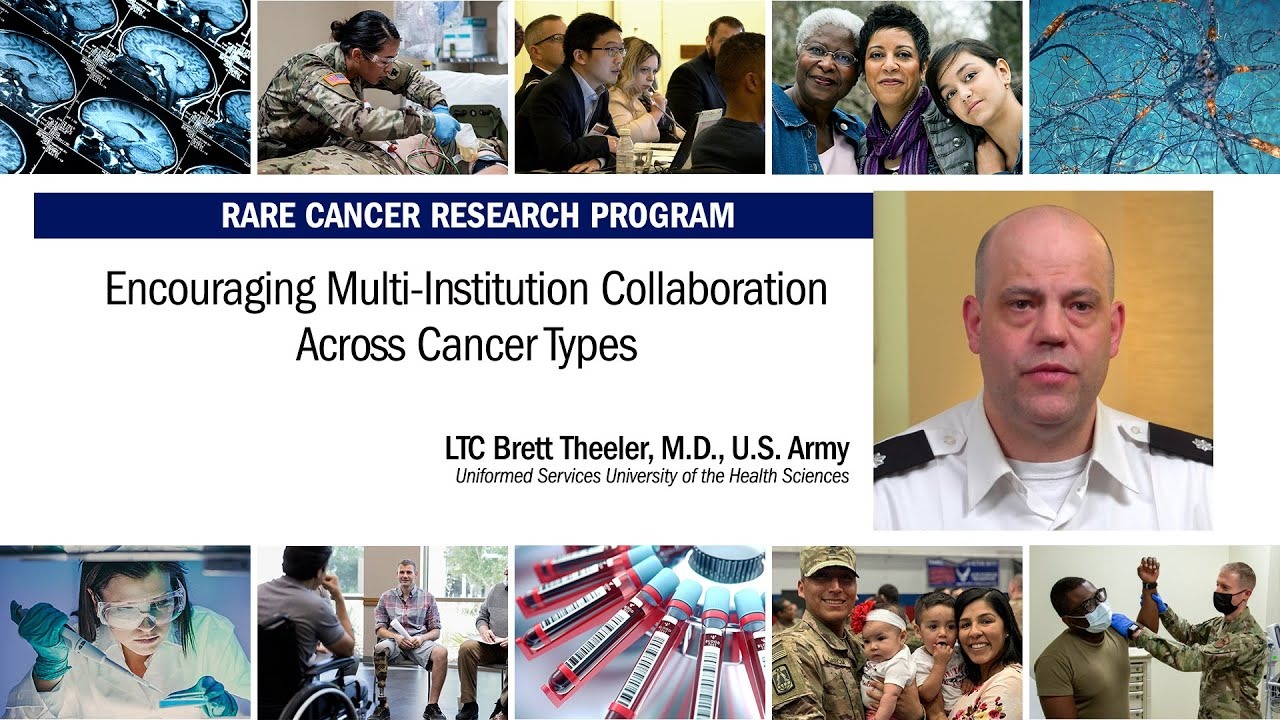
LTC Brett Theeler, MD
Chair, Department of Neurology
School of Medicine
Uniformed Services University of the Health Sciences
Bethesda, Maryland
Encouraging Multi-Institution Collaboration Across Cancer Types
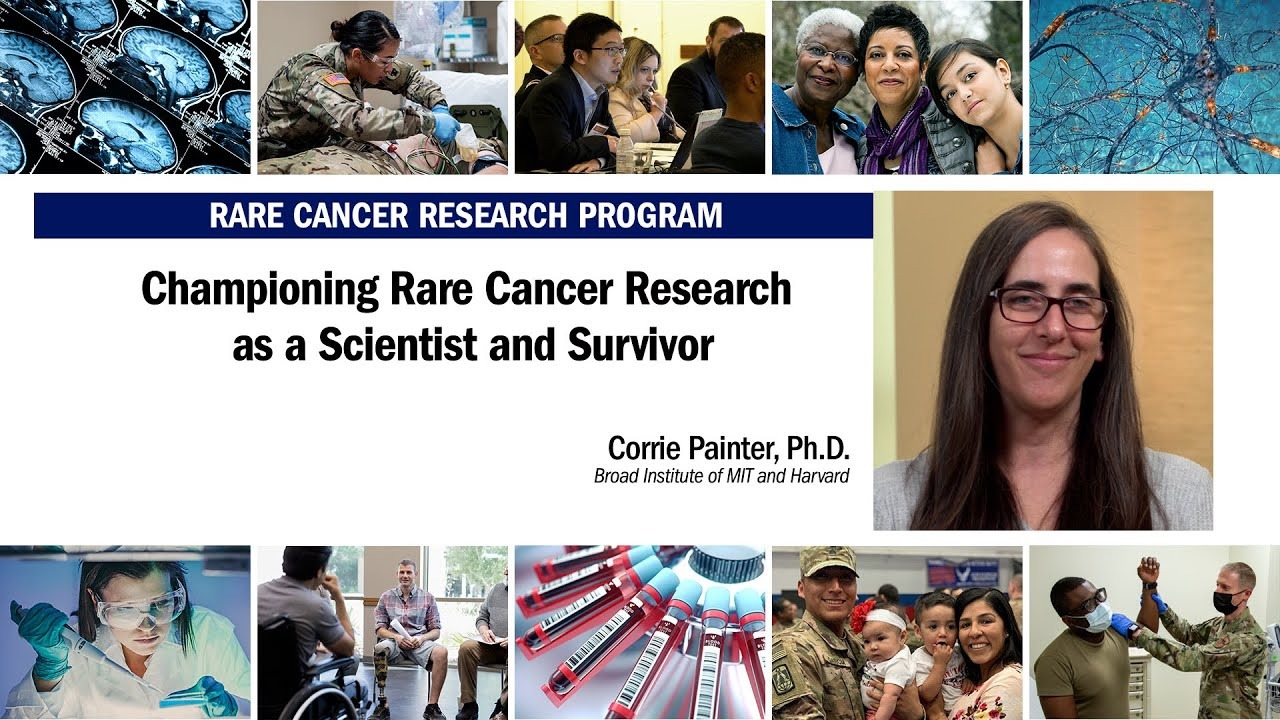
Corrie Painter, Ph.D.
Broad Institute of Massachusetts
Institute of Technology
Championing Rare Cancer Research as a Scientist and Survivor
[Click Image to Watch on DVIDS]
 News & Highlights
- CDMRP Drives Discovery of New Treatments for Brain Cancers
- FY25 RCRP Recommended for Funding List
- CDMRP Funds Research to Accelerate Treatments for Rare Diseases to Support Warfighters and their Families
- A Catalyst for Collaboration (Watch on DVIDS)
- National Childhood Cancer Awareness Month: Advancing Research in More Than 13 Types of Childhood Cancers, Including Neuroblastoma
- Brain Cancer Awareness Month: A Mother's Story
- Head and Neck Cancer Awareness Month:
April 2023 - Cholangiocarcinoma Awareness: A Rare Cancer Too Dangerous for a
“Watch-and-Wait” Approach - More…
Last updated Thursday, September 17, 2026